Your brain is always busy, even when you're asleep. Millions of nerve cells send signals at the same time, and together they create rhythms that a sleep lab can measure as waves. These are your brainwaves.
Brainwave sounds are audio tracks built around those rhythms. Here's what that means, in plain words.
The four bands
Brainwaves are grouped by how fast they repeat, measured in hertz (Hz), or cycles per second:
- Delta, about 0.5–4 Hz: the slowest waves. They're strongest in deep sleep.
- Theta, about 4–8 Hz: the drowsy, drifting state as you fall asleep, and parts of light sleep.
- Alpha, about 8–13 Hz: calm and awake, like when you close your eyes and relax.
- Beta, about 13–30 Hz: alert and focused, the state you're in at work.
Through the day and night your brain moves between these states. You don't control them directly. They follow what you're doing and how you feel.
How brainwave tracks work
Our ears can't hear tones as low as 4 Hz. So brainwave tracks use tricks to build a slow rhythm into sounds we can hear:
- Binaural beats play a slightly different tone in each ear. Your brain notices the gap between them as a gentle "beat". Binaural beats need headphones.
- Isochronic tones switch a single tone on and off at a steady speed. You can play them through a speaker.
The idea is that listening to a steady beat in a band may nudge you toward a matching state, for example a theta beat as you drift off.
What the research says
Researchers are still studying whether brainwave tracks actually change your brain's rhythms, and the results so far are mixed. Some people find them very calming. Others notice no difference.
So treat them as one more calm sound to try, not a switch for sleep. If a track helps you relax, that's a good reason to use it. If it doesn't, rain or soft noise may suit you better. Our guide to white, pink and brown noise is a good next read.
How to try them
- Pick the band that matches your goal. Delta or theta for bedtime, alpha for unwinding, beta for focus during the day.
- Use headphones for binaural beats. Choose soft, comfortable ones if you're lying down.
- Keep the volume low. The beat works quietly. Louder isn't better.
- Layer them. Many people like a brainwave track under rain or music, rather than on its own.
- Give it a few nights before you decide.
Skip brainwave tracks while driving or doing anything that needs your full attention. If you have epilepsy or a seizure disorder, check with your doctor before trying them.
Brainwaves in Zen Melodies
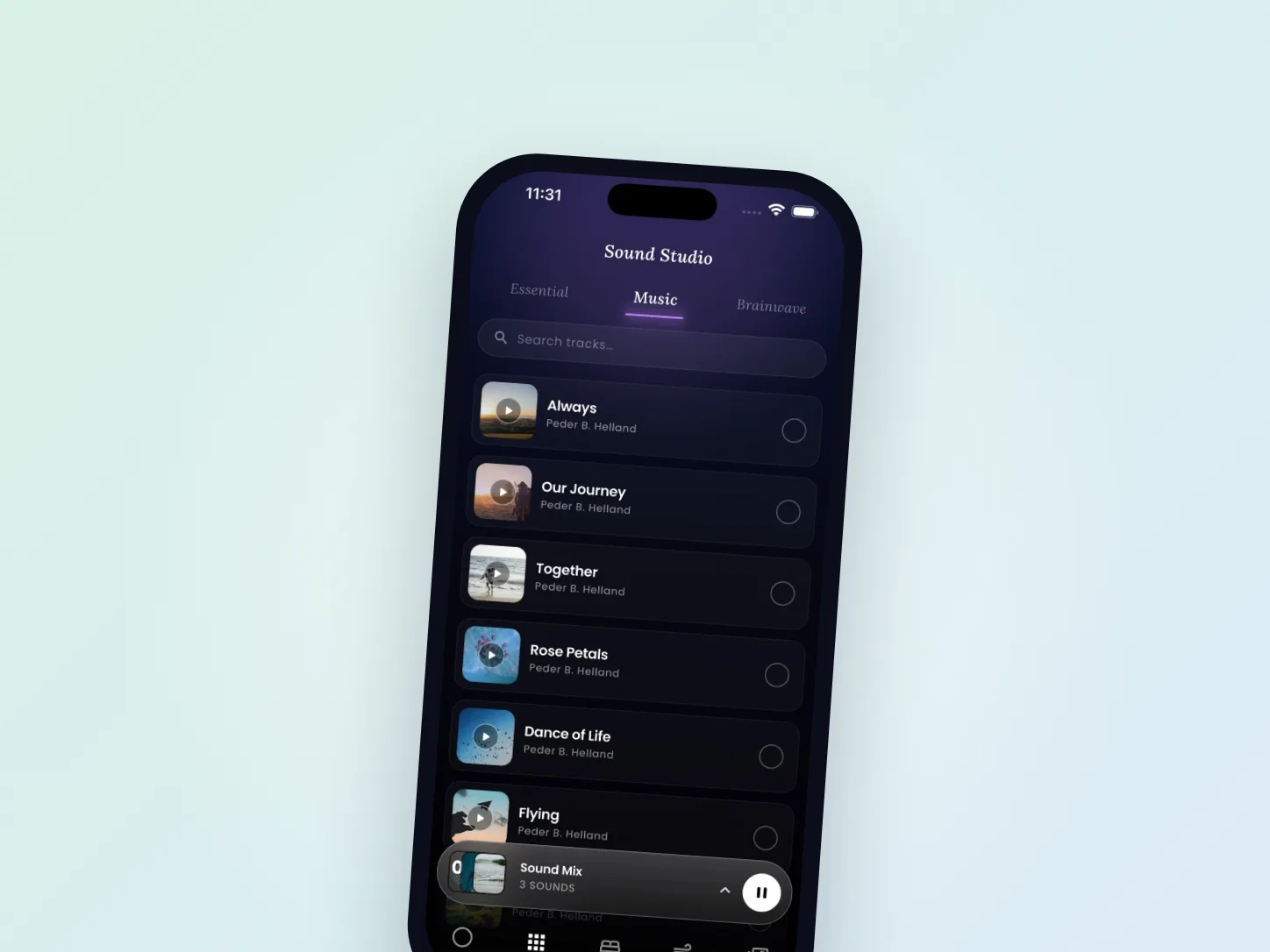
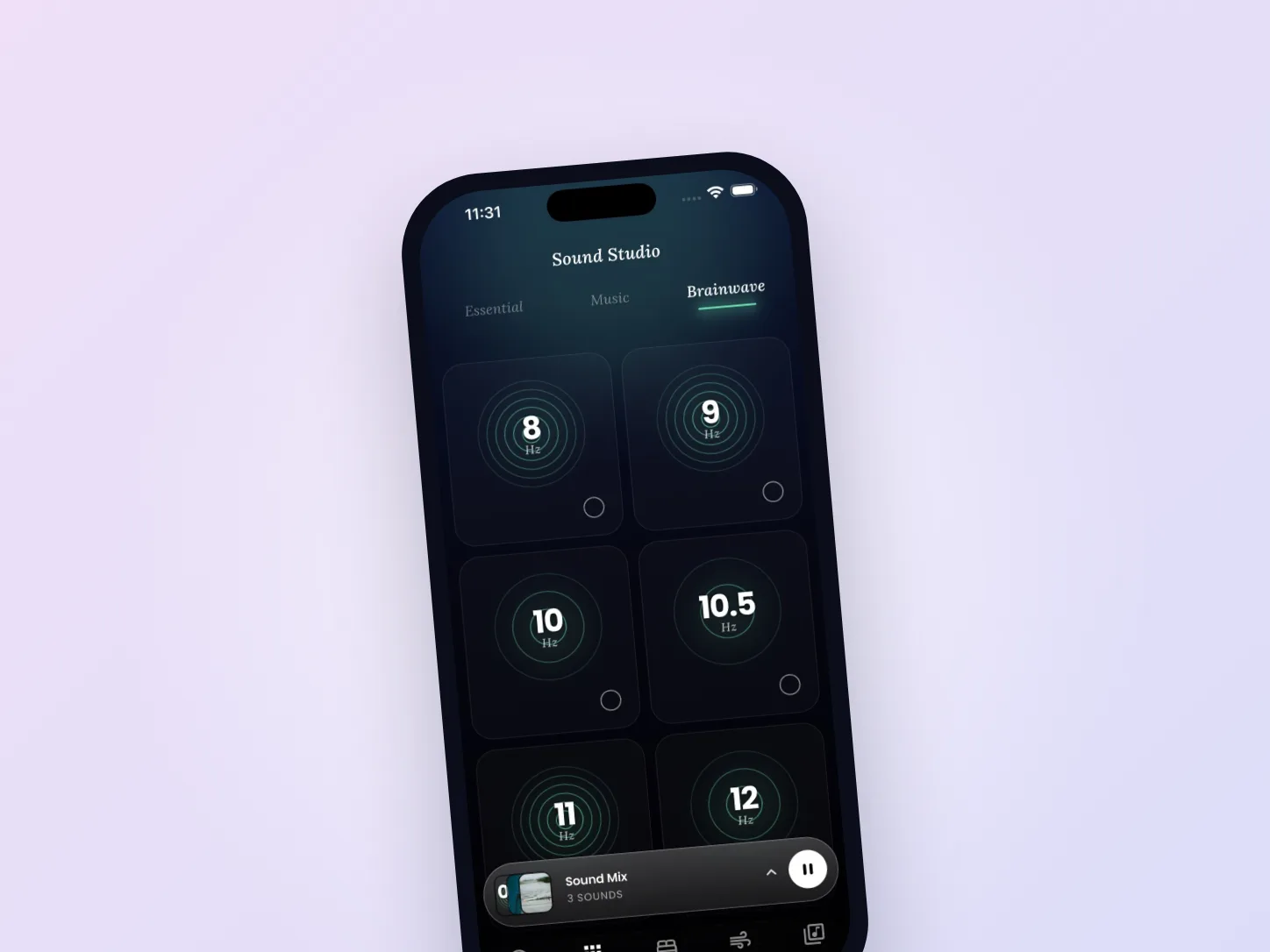
The Brainwaves tab in Sound Studio has tracks tuned to different frequencies. You can play one on its own, or layer it under nature sounds and music in your mix, and save the result to your Library.
Download Zen Melodies on the App Store to try them.