Most sleep advice is about bedtime: when to switch off, how to wind down, what to avoid in the evening. But if you want one habit that quietly helps everything else, start at the other end of the night. Get up at the same time every day.
Why your wake time matters
Your body runs on an internal clock that roughly follows the sun. It decides when you feel alert and when you start to feel sleepy. That clock takes many of its cues from the morning: when you wake, when you first see daylight, and when you start moving.
When your wake time jumps around, your clock gets mixed signals. A late Saturday and an even later Sunday can leave you lying awake on Sunday night and groggy on Monday morning, a bit like flying a few time zones west and back again.
A steady wake time does the opposite. After a while, you start to feel sleepy at about the same time each evening, without forcing it.
Choose a time you can keep
Pick a wake time that works on your busiest day, then keep it on your quiet days too. If that feels like a big change, move it in small steps, for example a little earlier every few days, rather than all at once.
On weekends, try to stay close to your usual time. A lie-in now and then won't undo anything, but a short one is kinder to Monday than a long one.
Make the morning easier
Getting up on time is easier when the first few minutes aren't a battle:
- Get daylight early. Open the curtains, step outside, or sit by a window with your coffee. Morning light is one of the clearest signals your body clock gets.
- Put the alarm across the room. If you have to stand up to turn it off, you're already up.
- Have a reason to get out of bed. A walk, a shower, a quiet breakfast. Something small to look forward to helps.
- Skip the snooze button. Snoozing gives you broken, light sleep rather than real rest.
What about bedtime?
Once your wake time is steady, bedtime tends to settle on its own. Go to bed when you feel sleepy, not just because the clock says so. If you're wide awake at your usual bedtime, a calm routine helps more than lying in bed trying to sleep. Establish a routine has ideas for building one, and Limit naps explains why long afternoon naps can push your night later.
If you keep a steady schedule and still feel tired every day, talk to a doctor. Ongoing tiredness can have many causes.
Set it in Zen Melodies
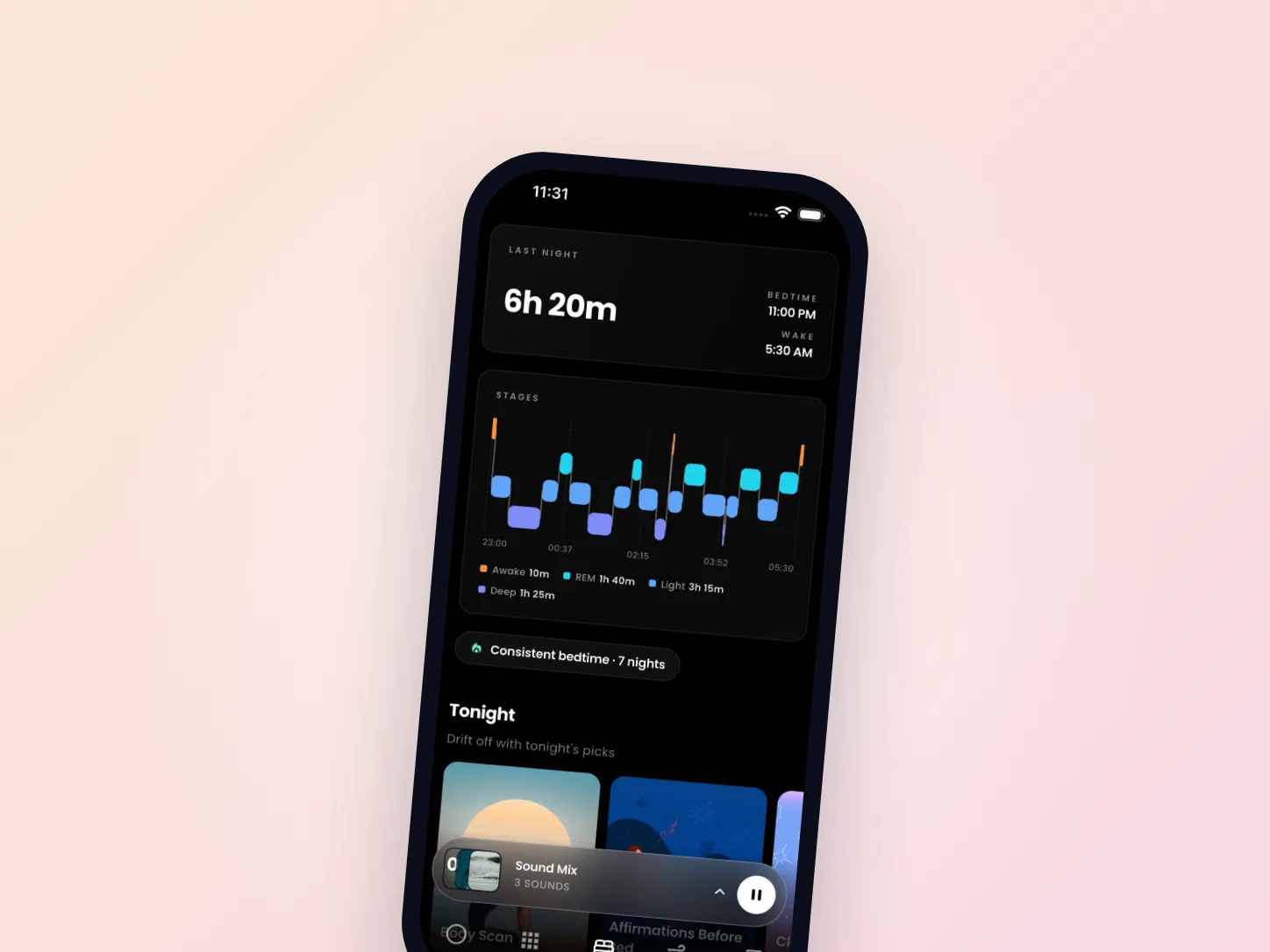
Sleep Mode in Zen Melodies lets you set a bedtime and a wake time, with a gentle reminder when it's time to wind down. If you use Apple Health, it can also show how you slept last night, so you can see how your new schedule is going.
Download Zen Melodies on the App Store to set your times.